


Korean Skincare for Dark Spots: How to Choose a Routine
Cecilia W.A practical Korean skincare guide
What should you use for dark spots and uneven-looking tone?
If a pimple is gone but the mark is still there, it can feel like the breakout never really left. The first step is figuring out whether you are looking at flat post-acne discoloration or a true scar, because those concerns need different expectations. For a Korean skincare routine focused on dark spots, start with one ingredient path that fits your skin and routine, then protect the morning routine with sunscreen.
This guide helps you sort out the concern first, then choose between vitamin C, niacinamide, and azelaic acid, find the right format, and build a routine you can actually repeat. The Korean approach here is flexible layering: use the steps that make sense for your skin rather than treating a long routine as a requirement.
What are hyperpigmentation and dark spots?
Hyperpigmentation is a broad term for areas of skin that look darker than the surrounding complexion. When choosing Korean skincare for hyperpigmentation, the goal is cosmetic support for the appearance of those areas, not a diagnosis of why a particular mark appeared. Dark spots on the face can refer to post-blemish marks, sun spots, or uneven-looking tone. These terms can describe different concerns, so skincare products cannot diagnose the reason for a particular mark.
For a cosmetic routine, the practical question is which ingredient path and routine step you can use comfortably and consistently. A product that is easy to apply and layer is easier to evaluate than a shelf full of overlapping steps.
Before choosing an ingredient, first identify whether you are looking at flat discoloration or a texture change. Once that is clear, choose the ingredient path and routine step you can use consistently.
Dark spots after acne: post-acne marks, PIH, or scars?
When a blemish heals, the color or texture it leaves behind can look like one concern even though it may be another. A flat brown or gray mark is often called post-inflammatory hyperpigmentation, or PIH. In everyday skincare language, people may call it a post-acne mark or a dark spot after acne. PIH is a color change, not a hole or raised area in the skin.
PIH versus acne scars: the practical difference
| What you notice | What it may indicate | What a routine can realistically do |
|---|---|---|
| Flat brown or gray mark | Post-acne PIH | Support a more even-looking tone over time with gentle, consistent care and daily sunscreen. |
| Flat red or pink mark | It may be post-inflammatory erythema, or PIE, rather than brown or gray PIH. | Keep the routine gentle and use sunscreen; do not assume every post-acne mark needs the same active ingredient. |
| Indented or raised texture | An acne scar or another textural change | Topical skincare may support overall skin comfort and tone, but texture concerns may need professional assessment. |
Skincare cannot diagnose a mark from a description alone. The practical distinction is that flat discoloration and scar texture are not the same problem, so they should not be given the same promise. If a mark is changing, painful, bleeding, very persistent, or worrying you, speak with a dermatologist.
Why do pimples leave post-acne marks?
Acne is an inflammatory process. As a blemish heals, the skin may produce extra melanin, leaving a darker mark behind. Picking, squeezing, or repeatedly irritating the area can prolong inflammation and increase the chance of a lingering mark. If breakouts are still active, managing the breakouts matters too: preventing new inflammation helps prevent a new cycle of post-acne marks.
Why sunscreen belongs in post-acne care
Sunscreen is not just the last step in a morning routine. Sun exposure can make uneven-looking pigment appear darker and can slow the visual improvement you are trying to achieve. Choose a broad-spectrum SPF 30 or higher every morning, apply it as the final skincare step, and reapply according to the product directions, especially during extended outdoor exposure, sweating, or swimming.
If visible-light-related darkening is a concern, a tinted sunscreen with iron oxides may offer additional support. Check the ingredient list rather than assuming that every tone-up sunscreen contains iron oxides. The featured SPF can fit the final morning step when its current label and finish suit your skin, but the protection step matters more than the tone-up effect.
Which ingredients support the look of dark spots?
For dark spots after acne, the first choice is a treatment path that fits the concern and the way your skin feels. This guide focuses on vitamin C and niacinamide because they fit the featured formats, while azelaic acid is worth knowing about when acne-prone skin and uneven tone overlap. None should be treated as a promise to erase every mark; formula, skin comfort, consistency, and the cause of the discoloration all matter.
Melanin is the pigment that gives skin its color. When more pigment is visible in one area than another, that area can look darker. Vitamin C and niacinamide are commonly used in cosmetic brightening routines, but they offer different ingredient paths.
What is vitamin C?
Vitamin C is an antioxidant ingredient used in cosmetic skincare to support a brighter, more even-looking complexion. It may appear as ascorbic acid or a vitamin C derivative, so the form and the rest of the formula matter. In this collection, the #OOTD Dark Spot Vitamin C Serum lists 1% ascorbic acid and ascorbyl glucoside.
Why choose it: Choose vitamin C when you want an antioxidant and brightening-focused step.
What to consider: Vitamin C products can use different forms and textures, so the serum, toner, and toner pad options are not interchangeable. Choose one product and follow its directions.
What is niacinamide?
Niacinamide is a form of vitamin B3 used in cosmetic skincare for tone-focused routines. It can be a useful choice when you want to place that step in a watery toner or moisturizer rather than a separate serum.
Why choose it: Choose niacinamide when you want a flexible path between a lightweight toner and a final cream step.
What to consider: The concentration, texture, and rest of the formula affect how the product fits your routine. Face Republic Vita Glow Niacin Toner lists 5% niacinamide and vitamin C, while Face Republic Vita Radiance Niacin 10 Cream lists 10% niacinamide, panthenol, and three forms of hyaluronic acid.
Where does azelaic acid fit?
Azelaic acid is another ingredient shoppers may encounter when uneven-looking tone overlaps with acne-prone or redness-prone skin. It can be a useful ingredient path to consider, but the formula, concentration, and directions still matter.
If you want to explore this path, review the ANUA Azelaic Acid 10 Hyaluron Redness Soothing Serum for its current formula and directions. Use it as one treatment step rather than layering several new brightening or exfoliating products at once.
How are vitamin C and niacinamide different?
Vitamin C and niacinamide can both fit a routine focused on the look of dark spots, but they serve different routine goals. Choose vitamin C for an antioxidant and brightening-focused step. Choose niacinamide for a flexible vitamin B3 formula that can sit in a toner or moisturizer. You do not need to use both, and neither is the single best ingredient for everyone.
For a vitamin C route, choose from the #OOTD Dark Spot Vitamin C Serum, #OOTD Dark Spot Vitamin C Toner, or #OOTD Vitamin C Dark Spot Toner Pads. For a niacinamide route, choose from Face Republic Vita Glow Niacin Toner or Face Republic Vita Radiance Niacin 10 Cream. For an azelaic acid route, choose the ANUA Azelaic Acid 10 Serum when uneven tone overlaps with blemish-prone or redness-prone skin. Open each product page for the current ingredient list, texture, and directions.
Want to compare more ingredient options? Compare Korean skincare ingredients for uneven tone, including vitamin C, niacinamide and TXA, with product examples and routine placement.
Which format fits your dark spot routine?
Start with the format that fits the routine step you can repeat: serum, toner, toner pads, moisturizer, or sunscreen. Choose the ingredient path first, then use that format where it naturally belongs. You do not need every format or every brightening-focused product at once.
| Format | Choose it when | Haven example |
|---|---|---|
| Serum | You want one focused leave-on step with a lightweight texture. | #OOTD Dark Spot Vitamin C Serum or ANUA Azelaic Acid 10 Serum |
| Toner | You prefer a watery layer after cleansing and before serum or moisturizer. | #OOTD Dark Spot Vitamin C Toner |
| Toner pads | You want a pre-soaked format that makes the toner step quick and tidy. | #OOTD Vitamin C Dark Spot Toner Pads |
| Moisturizer | You want a cream step that combines comfortable moisture with a tone-focused formula. | Face Republic Vita Radiance Niacin 10 Cream |
| Sunscreen | You are completing a morning routine focused on uneven-looking tone. | #OOTD Water Glow Tone-Up Sun Cream |
Once you choose the ingredient path, the format tells you where it fits: serum after toner; toner or toner pads after cleansing; moisturizer as the final cream step; and sunscreen as the final morning step.
Which products fit a dark spot routine?
The featured products below show how vitamin C, niacinamide, and azelaic acid paths fit different routine formats. Choose one step that fits your routine, then open each product page for the complete ingredients, directions, texture notes, and current availability.

Vitamin C serum path
#OOTD Dark Spot Vitamin C Serum 50ml
Choose this if you want one lightweight serum step for the look of dark spots, dull-looking skin, and uneven-looking tone. The water-based formula lists 1% ascorbic acid and ascorbyl glucoside and has a fragrance-free, non-sticky finish.
Routine placement: After cleansing and toner, before moisturizer.
View serum details →
Azelaic acid serum path
ANUA Azelaic Acid 10 Hyaluron Redness Soothing Serum 30ml
Choose this if your uneven-looking tone overlaps with blemish-prone or redness-prone skin and you want one focused serum step. The formula lists 10% azelaic acid with hydrating and soothing ingredients in a fragrance-free, non-comedogenic formula.
Routine placement: After cleansing and toner, before moisturizer.
View serum details →
Vitamin C toner path
#OOTD Dark Spot Vitamin C Toner 250ml
Choose this if you prefer a watery toner after cleansing. Vitamin C and ascorbyl glucoside are paired with niacinamide, heartleaf extract, squalane, glycerin, and propanediol in a fragrance-free formula.
Routine placement: After cleansing, before serum or moisturizer.
View toner details →
Vitamin C toner pad path
#OOTD Vitamin C Dark Spot Toner Pad, 70 Pads
Choose this if a pre-soaked pad makes consistency easier. The 70 pad jar uses a light water essence with niacinamide, vitamin C, heartleaf, squalane, and camellia seed oil.
Routine placement: After cleansing, before serum or moisturizer.
View toner pad details →
Niacinamide moisturizer path
Face Republic Vita Radiance Niacin 10 Cream 50ml
Choose this if you want a silky final moisturizer with 10% niacinamide. Panthenol, tocopherol, ascorbic acid, and three forms of hyaluronic acid support a soft, hydrated, comfortable finish.
Routine placement: After serum, as the final moisturizer step.
View moisturizer details →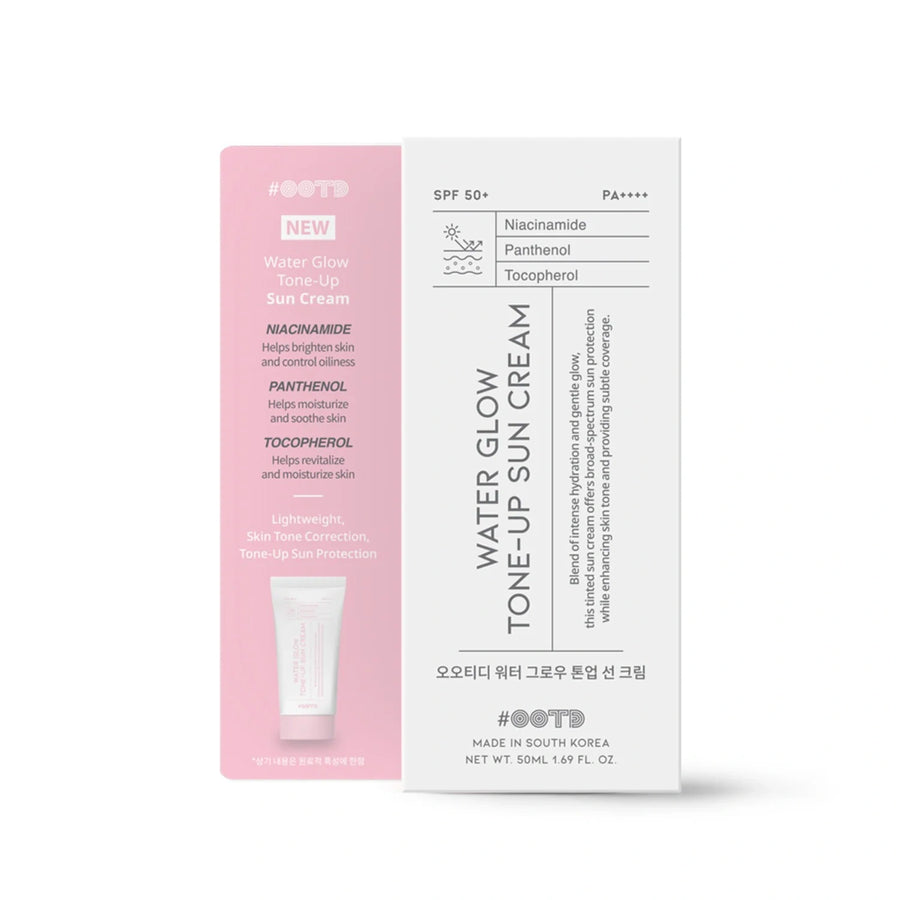
Morning sunscreen support
#OOTD Water Glow Tone-Up Sun Cream SPF 50+ PA++++ 50ml
Choose this if you want a mineral SPF 50+ PA++++ step with a soft pink salmon tone-up finish. The formula lists zinc oxide and titanium dioxide along with niacinamide, panthenol, adenosine, and vitamin E.
Routine placement: Final morning step, after moisturizer.
View SPF details →How to build a simple routine for dark spots and uneven-looking tone
A simple dark spot routine starts with cleansing, one vitamin C, niacinamide, or azelaic acid step, moisturizer as needed, and sunscreen in the morning. The examples below show where each step fits so you can build a routine without using every brightening-focused product at once.
Morning routine
In the morning, cleanse, choose one ingredient step, moisturize if needed, and finish with sunscreen.
- Cleanse first. Refresh the skin and remove overnight buildup with the cleansing step that fits your routine. For more detail, see our Korean double cleansing guide.
- Choose one ingredient path. For vitamin C, choose one serum, toner, or toner pad and use it according to the product directions. For azelaic acid, choose a serum and use it after toner, before moisturizer, following the product directions. For niacinamide, choose the toner or moisturizer step that matches your routine. A serum sits after toner and before moisturizer; a toner or toner pad sits after cleansing and before serum or moisturizer.
- Add comfortable moisture. Use a moisturizer when your routine needs a final cream layer. Face Republic Vita Radiance Niacin 10 Cream is applied after the rest of your skincare as the final moisturizer step.
- Finish with sunscreen. Apply #OOTD Water Glow Tone-Up Sun Cream as the final morning skincare step before makeup or on bare skin, then reapply as directed. Our Korean sunscreen guide explains how to compare sunscreen formats.
Evening routine
In the evening, cleanse, use your chosen ingredient step, and moisturize as needed; sunscreen stays in the morning routine.
- Cleanse first. Remove the day’s buildup and sunscreen with the cleansing step that fits your routine.
- Use your chosen ingredient step. Apply one vitamin C, niacinamide, or azelaic acid product according to its directions. If you use toner pads, follow the product’s instructions for a gentle swipe or short targeted layer. See How to Use Korean Toner Pads After Cleansing for the broader toner pad guide.
- Moisturize. Finish with a comfortable cream layer when your routine needs it. Keep sunscreen out of the evening routine.
Keep the routine easy to evaluate. Introduce one new leave-on product at a time rather than layering every vitamin C and niacinamide option together. If a product does not feel comfortable, pause and reassess instead of adding more active steps. Follow the directions on the current product page and packaging.
For the broader order of cleanser, toner, serum, moisturizer, and sunscreen, use the K Beauty Routine Guide.
How do you apply the featured products?
The demos below show how three featured steps are applied and placed in a routine. Check the current product directions before use, then add only the steps your routine needs.
 Watch the serum application
#OOTD Dark Spot Vitamin C Serum application
Dispense a small amount, gently spread it over the skin, and tap it in after cleansing.
View product directions Watch the toner pad method
#OOTD Vitamin C Dark Spot Toner Pad application
Place the pre-soaked pads, remove them after a short targeted layer, and follow with the rest of the routine.
View product directions Watch the SPF application
#OOTD Water Glow Tone-Up Sun Cream application
Spread the tinted SPF over the face as the final morning step for a soft tone-up finish.
View product directionsHow to choose a routine for dark spots without overcomplicating it
Choose one ingredient path, match it to one routine step, and add only what the routine needs. Use these questions to make the choice:
- Which ingredient path fits your goal? Choose vitamin C for an antioxidant and brightening-focused step, niacinamide for flexible tone-focused care in a toner or moisturizer, or azelaic acid when uneven tone overlaps with blemish-prone or redness-prone skin.
- Which routine step will you repeat? Place the ingredient path in the serum, toner, toner pad, or moisturizer step that feels comfortable and follows the product directions.
- What keeps the routine sustainable? Follow the product directions and avoid adding several new leave-on products at the same time.
For more options connected to this concern, browse the full Korean skincare collection for dark spots and uneven-looking tone. Open each product page for current ingredients, directions, and texture details.
What should you expect from a dark spot skincare routine?
Start by evaluating comfort, not color change. During the first 1 to 2 weeks, pay attention to whether the routine feels comfortable and whether it causes stinging, persistent redness, or new irritation. If it does, pause and reassess instead of adding more active steps.
Once the routine feels comfortable, use it consistently and compare progress around 8 to 12 weeks rather than judging it day by day. Some dark spots may improve sooner, while marks that are several shades darker than your natural skin tone can take 6 to 12 months to fade after the trigger is controlled. That is a reasonable expectation, not a promise for every person or every mark.
If the concern is indented or raised texture, treat it as a different scar-related concern rather than waiting for a brightening routine to change the surface. If discoloration keeps returning, breakouts are persistent or painful, or a mark concerns you, a dermatologist can help identify the cause and discuss appropriate options.
Frequently asked questions
Start by identifying the type of mark, then use the ingredient, sunscreen, and format questions to build a routine that is easy to evaluate.
Are post-acne marks the same as acne scars?
What are dark spots after acne called?
Can sunscreen prevent PIH from getting darker?
How long should you try a dark spot routine before evaluating it?
What is the best Korean skincare for dark spots?
Can Korean skincare improve the appearance of hyperpigmentation?
Should you choose vitamin C or niacinamide for dark spots?
Can you use toner, toner pads, and serum together?
Which product should you start with if your skin is sensitive?
Shop Korean skincare with clear product details
Compare current product directions, formula details, and routine placement on each product page before choosing your next step.
Start with the ingredient path that fits your concern
Choose the ingredient path that fits your concern, place it in a routine step you can repeat, and complete your morning routine with moisturizer and sunscreen.


